
How to Spot Fake Pokemon Evolutions Reverse Holos
How to tell a fake XY Evolutions reverse holo from a real one by its reverse holo pattern, color and depth, with side by side photos of a real and fake card.
Shane Elmer
Author
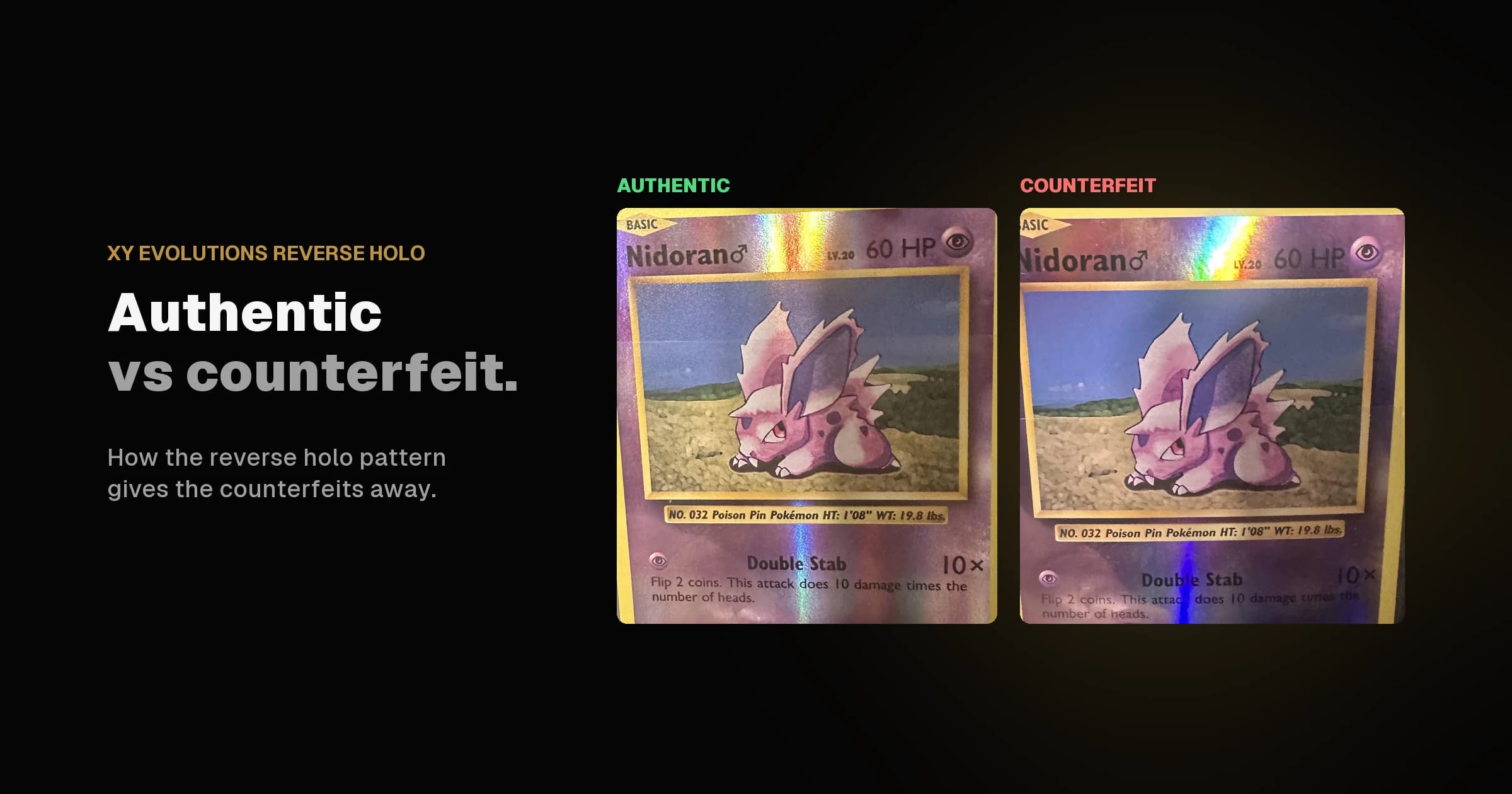
The short answer: a real 2016 Pokemon XY Evolutions reverse holo has a fine, tightly packed sparkle that breaks the light into narrow, defined color stripes and sits flat with the print. The counterfeits we see show a wider, smoother rainbow that washes out to white in the middle, often sweeps diagonally, and looks slightly raised off the card. Tilt the card under a single light next to one you trust and the difference is usually clear.
Counterfeit Evolutions reverse holos are turning up in submissions, and they are good. The card stock, the colors and the text all look right at a glance, and plenty of collectors who have owned these cards for years would never think to question them. The tell is the one part that is hardest to copy: the reverse holo itself. This guide shows what we look for, using a genuine Evolutions Nidoran and a counterfeit of the same card.
Real vs fake Evolutions reverse holo, side by side
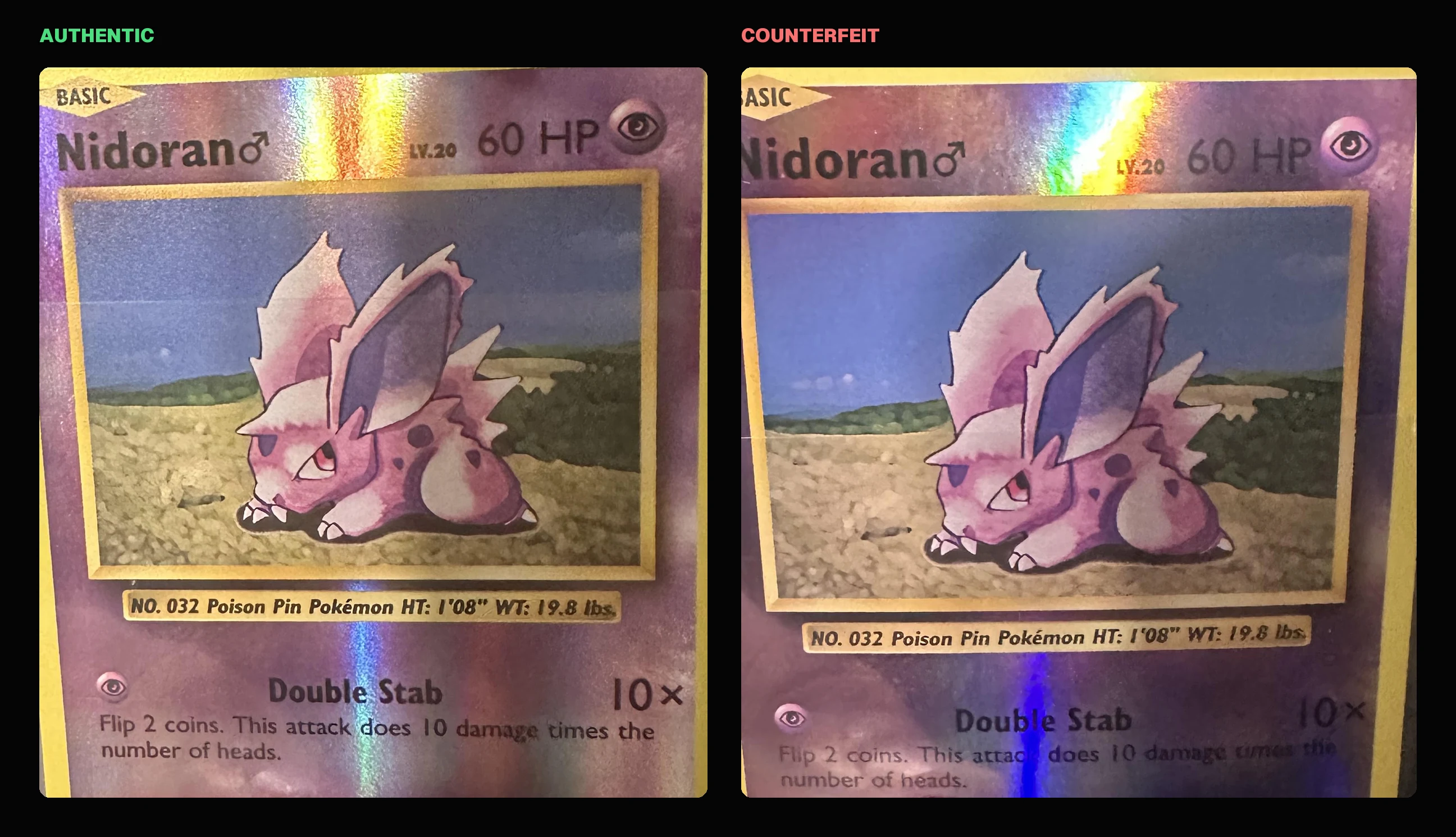
At arm's length the two cards are almost identical. Both show a rainbow band when you tilt them, both have the right purple background and the right print. The difference shows up when you look at how that rainbow band is drawn.
How to tell if an Evolutions reverse holo is fake
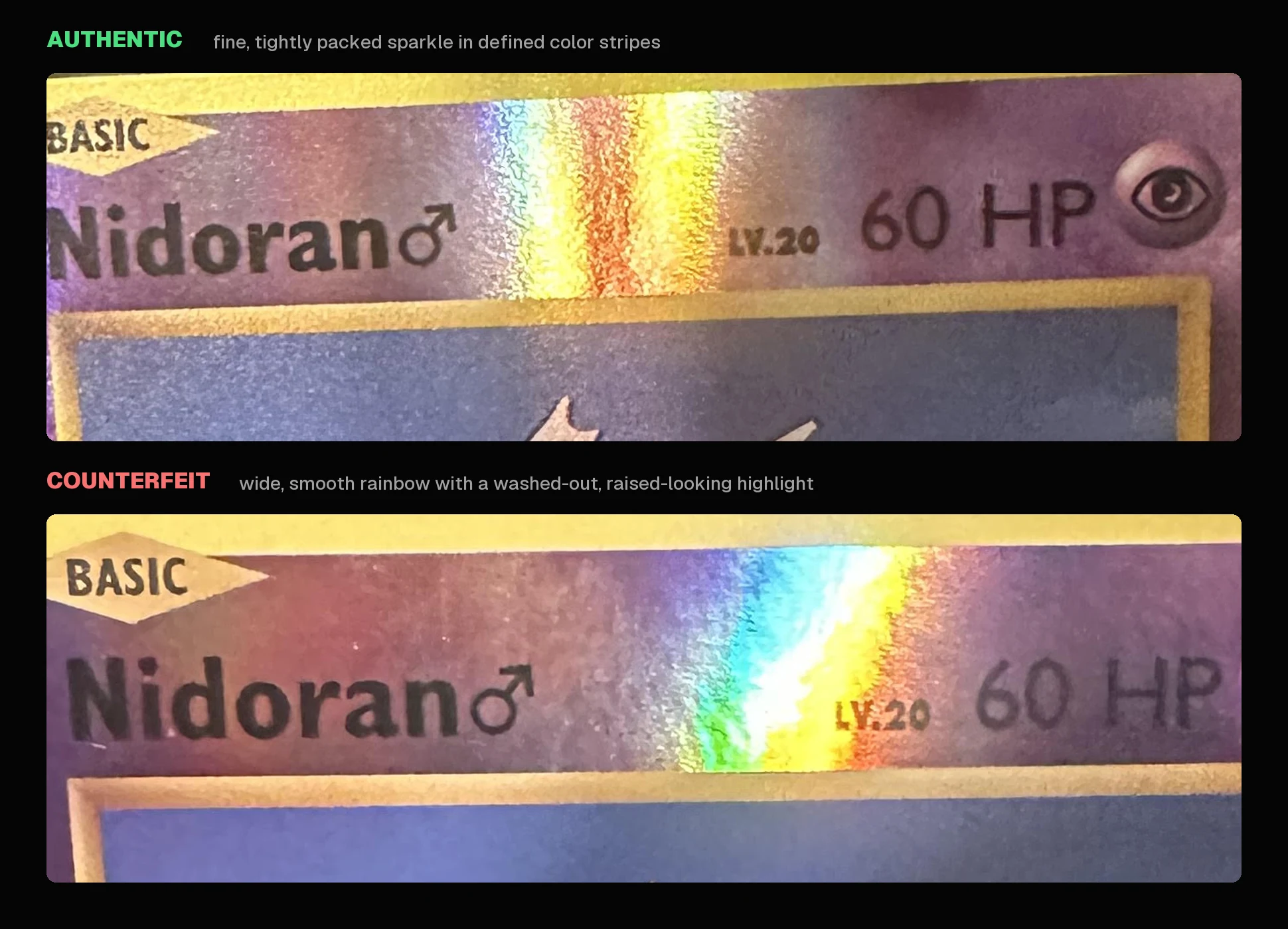
1. Precision of the pattern. On an authentic Evolutions reverse holo the reflection is made of fine, tightly packed sparkle. The colors sit close together in narrow, defined stripes, and the texture stays crisp even up close. On the counterfeit the rainbow is wider and smoother, the colors blend into each other instead of separating, and the center of the band washes out to white.
2. Color. Both cards show a full rainbow, so "is it rainbow" is not the test. Look at how saturated and how separated the colors are. The authentic band reads as many small points of color; the counterfeit reads as one broad, soft gradient.
3. Direction. On our authentic copy the color stripes run straight up and down the card. On the counterfeit the band sweeps across at an angle. Compare the direction against a card you trust from the same set.
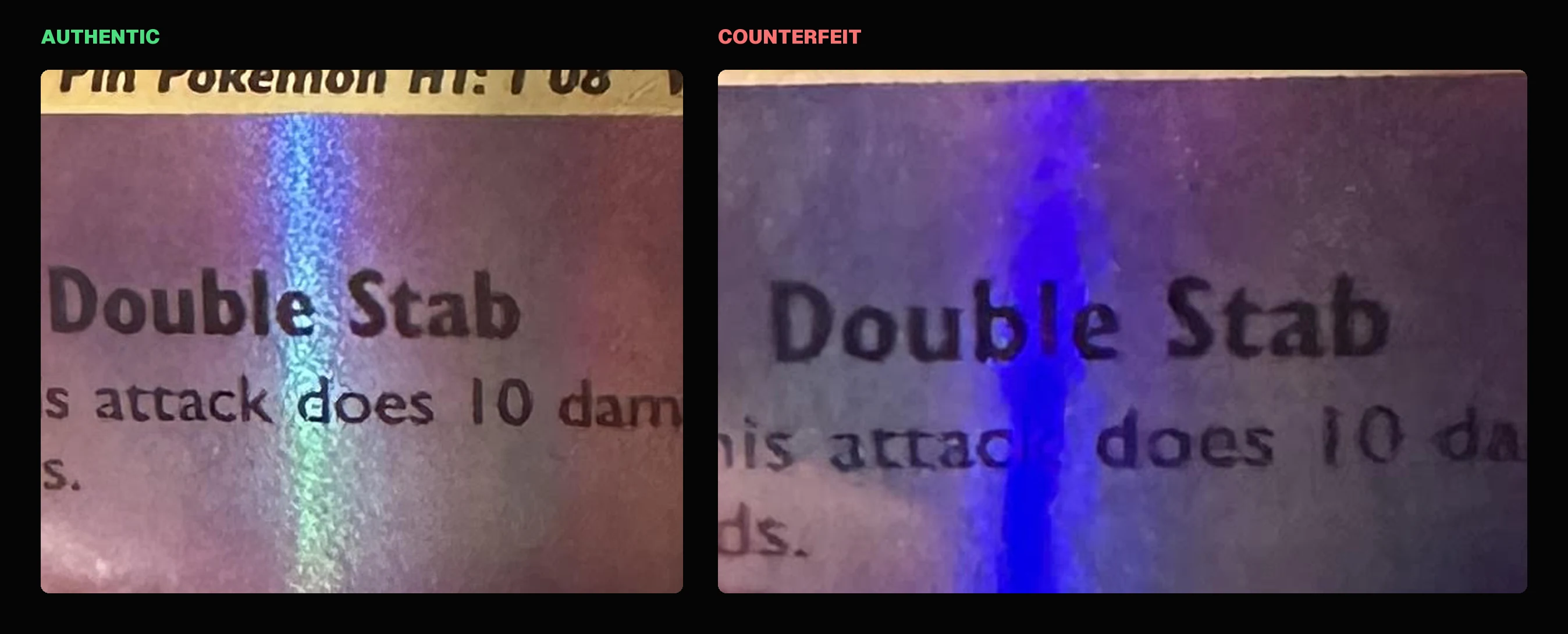
4. Depth. This is the hardest one to photograph and the easiest to notice in hand. The authentic reverse holo sits flat and flush with the print, as if the foil and the ink are one surface. The counterfeit has a bubbly look. It is not a literal bubble, but the foil appears to sit raised above the print, almost floating on top of the card.
How to check your own cards
You do not need special equipment, but you do need a good comparison:
- Use one light source. A single desk lamp or a phone flashlight works better than room lighting. Tilt the card slowly until the rainbow band crosses the name bar.
- Compare against a card you trust. Any Evolutions reverse holo pulled from a pack you opened yourself is a good reference. Hold the two cards at the same angle under the same light.
- Look closely at the band. A loupe or your phone's zoom helps. Fine, crisp sparkle with defined color stripes is what an authentic card shows. A smooth, wide, washed-out rainbow is a warning sign.
- Look for depth. If the foil looks like it is sitting on top of the print rather than in it, take a second look.
These counterfeits are extremely good. An avid collector will usually sense that something is off, but many people who notice it will put it down to a printing variation and move on. If a card makes you hesitate, it is worth comparing it properly.
New to spotting fakes? Start here
If you are just getting started, this video from Insider Tech walks through the basics of spotting fake Pokemon cards. It is a few years old and covers the easier tells, so it will not catch counterfeits as good as these Evolutions reverse holos, but it is a useful head start before you compare reverse holo patterns.
Other collectors have noticed the same thing
We are not the first to point at the foil. When counterfeits of the newer XY era sets, including Evolutions, started circulating, collectors on Elite Fourum described fake reverse holos that did not look like the reverse holo they were used to, holo that looked more three dimensional than the real card, and a rainbow shine the originals do not have. Several also said the fakes felt different in hand because of the material used.
General counterfeit guides make the same points. The Card Shop Finder notes that genuine foil sits level with the card while counterfeit foil can feel raised or textured, and Ungraded's fake card guide warns that counterfeit holo is often flat and uniform, the wrong scale, or running in a different direction than the genuine card.
Authentic Evolutions reverse holos graded by CCA
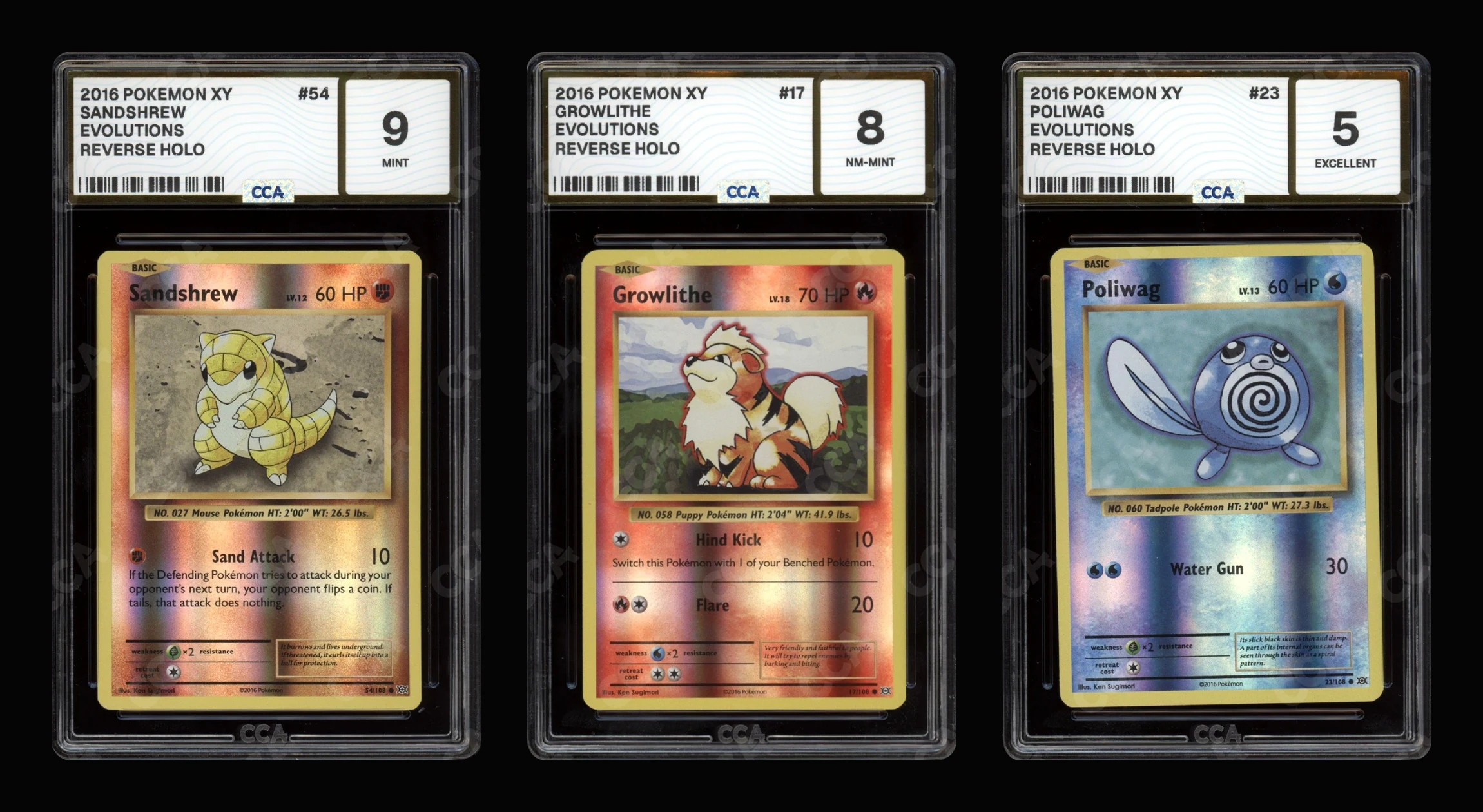
Every card CCA grades gets a public certification record with front and back scans, so you can compare the reverse holo on your own card against cards we have authenticated. You can browse the set in our card database and see every graded copy in the Population Report.
Why CCA will not grade or authenticate these cards
Based on what we see in hand, we believe the reverse holo on these counterfeits is a completely different material from the foil used on the original print run, not a printing variation. A card made with different materials is not the card it claims to be, so CCA will not grade or authenticate Evolutions reverse holos that show this pattern. They are returned to you ungraded.
We know this may be upsetting. Many collectors who own one of these cards bought it in good faith and had no reason to doubt it. That is exactly why we are publishing what we look for, so you can check your own collection.
You will not be charged for counterfeits you did not know about
Through December 31, 2026, when you submit a commonly counterfeited card like this and we determine it is not authentic, you are not charged the grading fee for that card. We adjust your invoice to the cards we actually grade, and you confirm the updated total before anything is charged, the same way any invoice change works on your billing page. This does not apply to cards submitted knowingly as counterfeits, and the policy is subject to change after 2026.
If you are unsure about a card before you send it in, open a support ticket with clear photos of the reverse holo under a single light, and we will tell you what we see. You can also read how we grade and authenticate cards, see what Pokemon card grading with CCA includes, or read our earlier post on verifying a CCA slab.