
Pokemon card grading
Pokemon card grading with four published subgrades.
Authentication, condition grading and a sealed, tamper-evident holder for your Pokemon cards. From $8 per card on Bulk (10 card minimum) or $10 per card on Standard.
Four condition subgrades
Centering, corners, edges and surface
Measured centering
Front and back ratios on the cert
Public certification record
Front and back slab scans
Not charged up front
Card on file is charged when grading is done
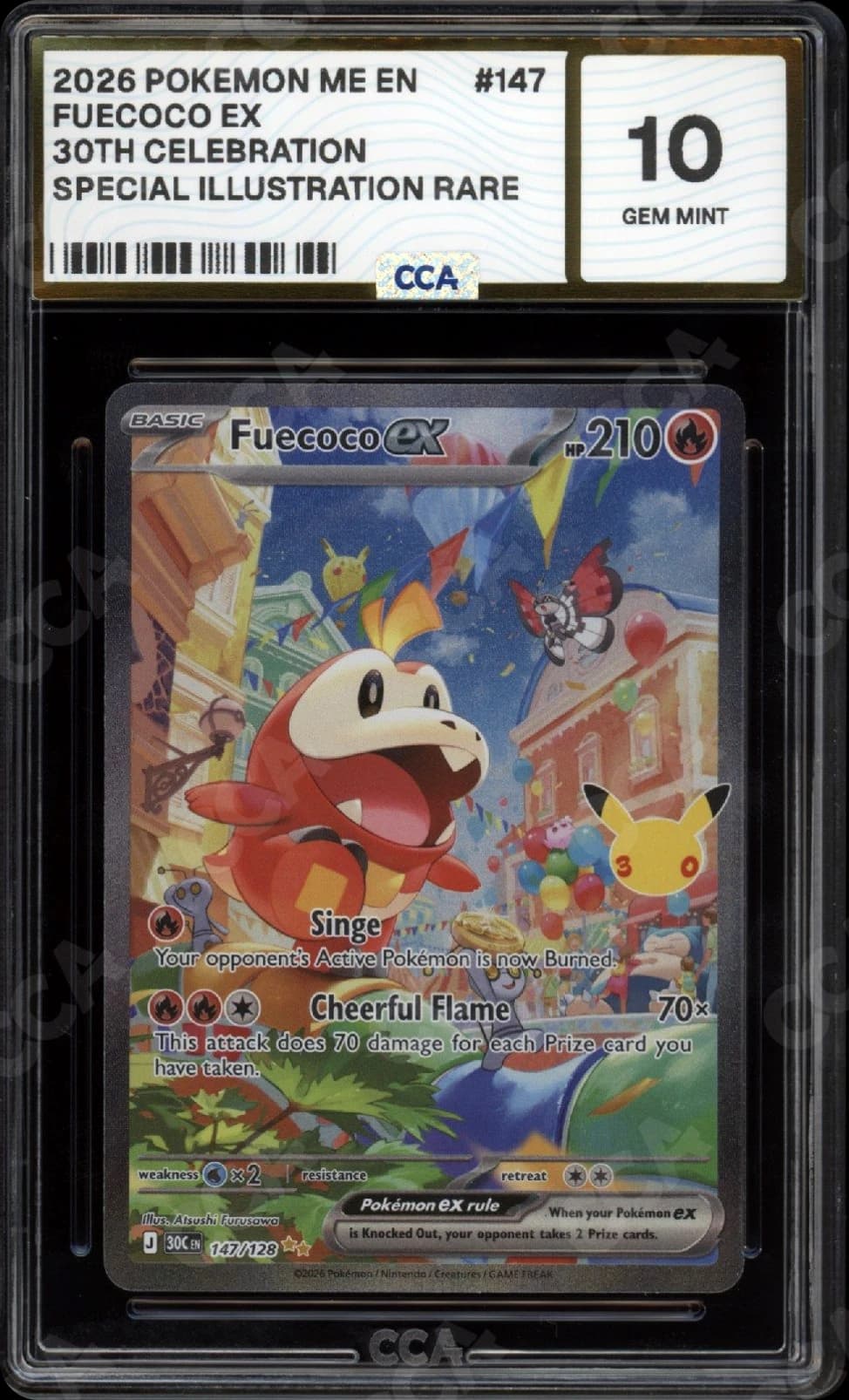
Example certification
2026 Mega Evolution 30th Celebration Fuecoco ex
CCA 10 Gem Mint · Cert #230
- Centering
- 10
- Corners
- 10
- Edges
- 9.5
- Surface
- 9.5
How much does Pokemon card grading cost?
At CCA, grading a Pokemon card costs $8 per card on Bulk when you send 10 or more, or $10 per card on Standard with no minimum. Express is $25 and Walk-Through is $75.
| Service level | Per card | Minimum | Estimated turnaround | Included coverage |
|---|---|---|---|---|
| Bulk | $8 | 10 cards | 7–14 days | up to $100 per card |
| Standard | $10 | None | 5–10 days | up to $250 per card |
| Express | $25 | None | 3–5 days | up to $500 per card |
| Walk-Through | $75 | None | 24–48 hours | up to $1,500 per card |
Turnaround is an estimate in calendar days, counted from confirmed intake and excluding shipping. Coverage above the included amount is 5% of the additional declared value. Prices exclude shipping.
Every service level includes the same grading: authentication review, four subgrades, encapsulation and a public certification record. The difference is the estimated turnaround and how much coverage is included per card. A 10 card Bulk submission is $80 in grading fees; a single card on Standard is $10.
Coverage is included up to $100 per card on Bulk and $250 per card on Standard. If the total declared value of your order is higher than the included amount, the extra coverage costs 5% of the difference. Shipping to CCA is yours to arrange, and return shipping is calculated at checkout. A card that cannot be graded is not charged the grading fee. For a full cost breakdown across graders, see how much it costs to grade a card, or estimate a larger order with the bulk grading calculator.
Which Pokemon cards can CCA grade?
English Pokemon cards from the original Wizards of the Coast sets through current Scarlet & Violet and Mega Evolution releases, including Black Star promos and product promos.
Start by searching the Pokemon card database, part of a free catalog of over 430,000 cards. Picking the exact printing (holo, reverse holo, 1st Edition, Shadowless, stamped promos) is what puts the right designation on the label. If a card is not in the database yet, you can add it manually when you build the submission, and you can mix Pokemon, other TCG and sports cards in one order.
If a card is unusually thick or oversized, ask us before you send it.
How does CCA grade a Pokemon card?
Each card gets four condition subgrades: centering, corners, edges and surface. The overall grade is not an average of the four.
Surface carries the most weight, because the face of a Pokemon card is where holo scratches, print lines, indentations and loss of gloss show up first. The overall grade is also capped relative to the weakest subgrade, so one clear flaw cannot be hidden by three strong scores. A flawless surface never lifts a card beyond what its centering, corners and edges support.
The full method, with worked examples and an estimator that runs the same formula, is on the CCA grading standards page. Every subgrade appears on the public cert, so a buyer can see why a card earned its grade.
How is centering measured on Pokemon cards?
Centering is measured from front and back scans: the border on each side, from the cut edge to the printed frame, is turned into a left/right and a top/bottom ratio.
The worse of the two axes is the one that counts. A front earns a 10 for centering at 55/45 or better, and the back at 60/40 or better; the centering subgrade is the average of the two scores. A technology-assisted measurement places the lines and a grader reviews every one before the grade is saved.
Two Pokemon examples from the public record: cert #216, a 1999 Jungle 1st Edition Pikachu, measured 51/49 by 53/47 on the front for a 10 in centering, while cert #144, a 30th Celebration Pikachu, measured 58/42 left to right and dropped to a 9 on the front. Check your own card with the card centering calculator, or read what we learned measuring 200+ graded cards.
What does a CCA Pokemon label show?
The year the card was released, the game, the series or promo code with a language code, the card number, the card name, the set or source product, and one designation when it identifies the card.
Designations such as Holo Rare, Reverse Holo, Illustration Rare, 1st Edition or a stamp print on the label. Tags that say nothing about the print, like Common, Uncommon, a bare Rare or Promo, are left off so the label stays readable. The full convention is in the CCA slab label standard for Pokemon, and the back label links to the certification record.
How do I get Pokemon cards graded?
Create a free account, choose a service level, add your cards from the database with a declared value, then ship them with the packing slip.
- Choose a service level. Bulk for 10 or more cards, Standard for any number, Express or Walk-Through when you need it sooner.
- Add your cards. Search the catalog, pick the exact printing and enter what each card is worth raw.
- Review and submit. Your itemized total, coverage and return shipping are shown before you submit.
- Pack and ship. Sleeve each card, place it in a semi rigid holder and include the printed packing slip.
- Track, reveal and verify. Follow each stage in your dashboard, reveal grades card by card, and look up any cert on the certificate lookup.
The full walkthrough is on how CCA grading works.
Is a CCA 10 the same as a PSA 10 or a CGC 10?
No. Each grader applies its own published standards, so a grade from one company is not equivalent to the same number from another.
What CCA adds is visibility: the four subgrades, the measured centering and both slab scans are public on every cert, so you can judge the card for yourself. If you are deciding between the larger graders, the PSA vs CGC comparison sets out price, turnaround and grading differences with dated figures.
Is my Pokemon card worth grading?
Grade for resale when the difference between the card's raw value and its likely graded value comfortably covers the full cost per card. Grade for protection and verification when the card matters to you.
Before sending a card, check its centering, look at the holo surface under a bright light and compare recent sold prices for raw and graded copies. The Pokemon Population Report lists the Pokemon cards CCA has graded and is free to view.
Good to know
Turnaround is an estimate in calendar days, counted from confirmed intake and excluding shipping. Your card on file is charged when grading is complete, after you approve the itemized total.Keep reading
Recent certifications
Pokemon cards recently graded by CCA.
Real customer cards. Select a slab to open its public certification record with front and back scans and all four subgrades.
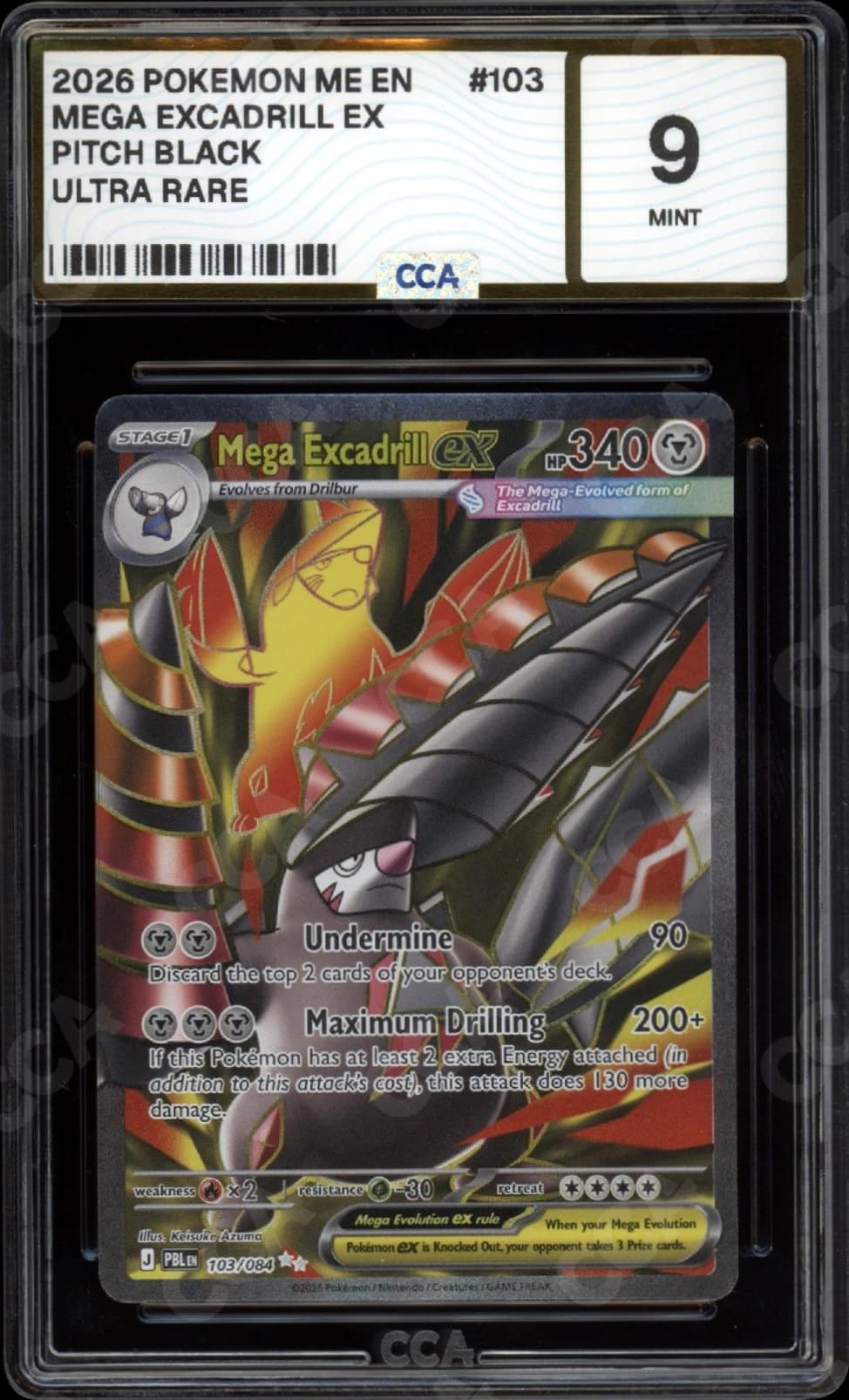
Mega Excadrill ex
2026 Mega Evolution Series Pitch Black
CCA 9 · Cert #231
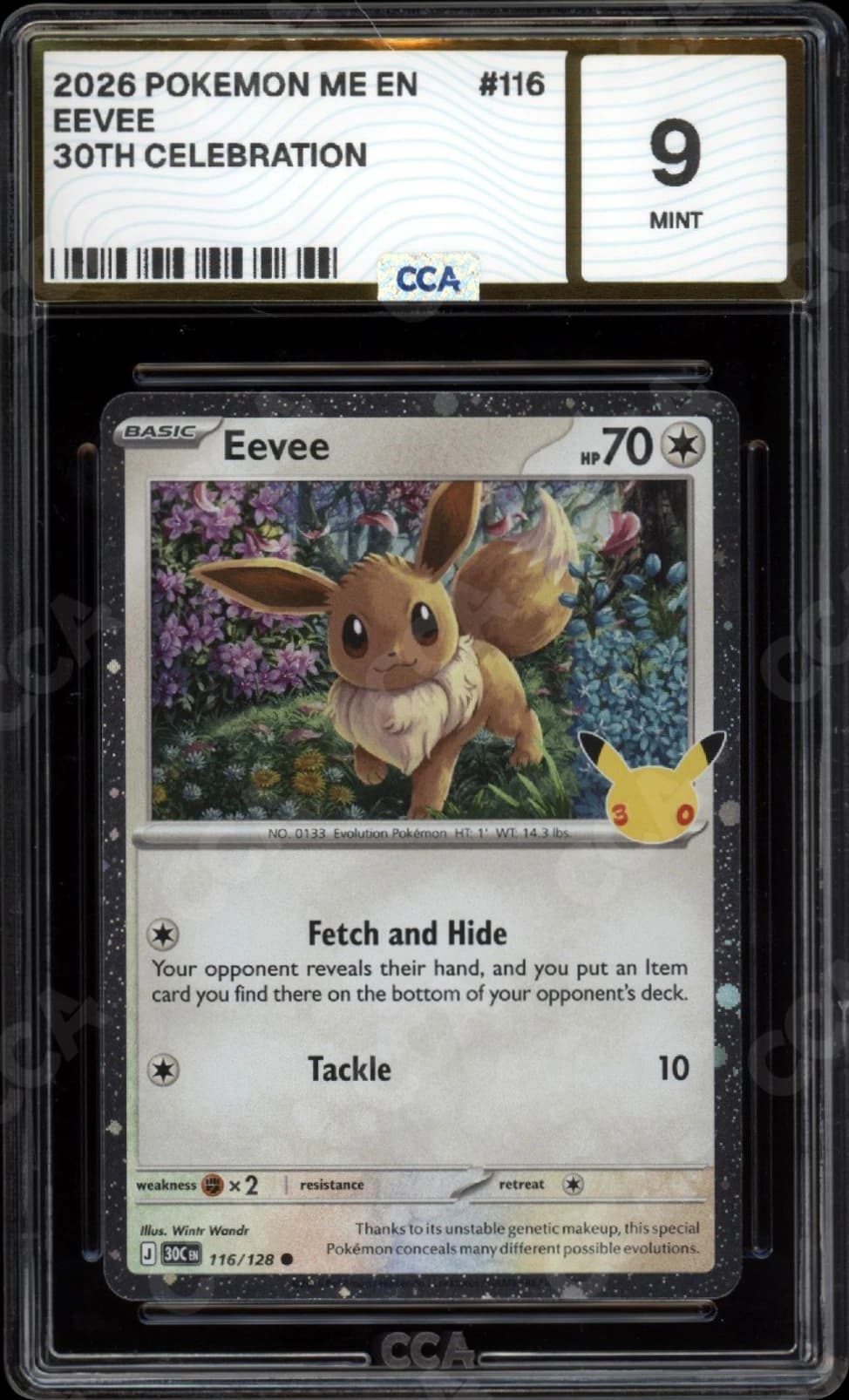
Eevee
2026 Mega Evolution Series 30th Celebration
CCA 9 · Cert #229
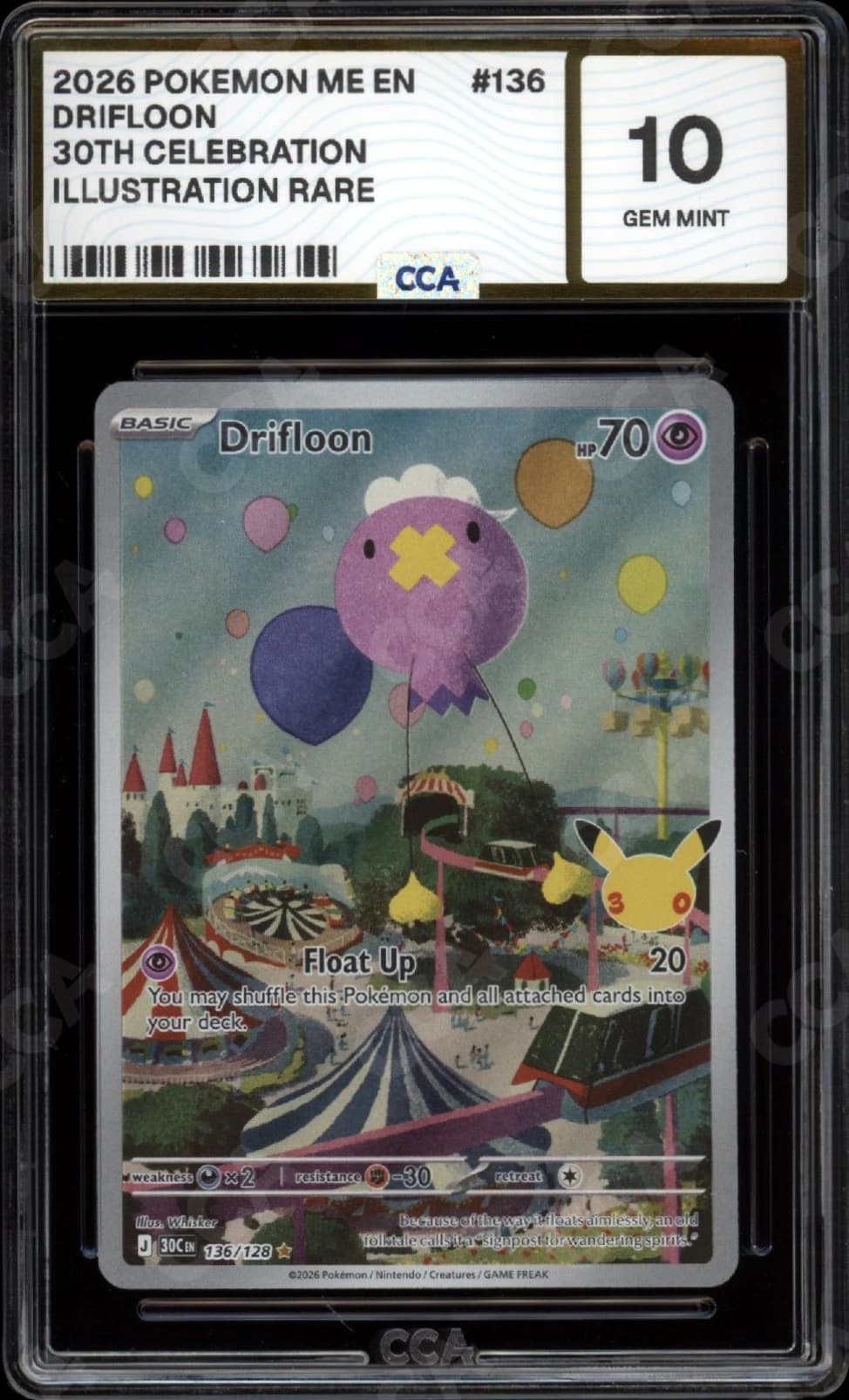
Drifloon
2026 Mega Evolution Series 30th Celebration
CCA 10 · Cert #228
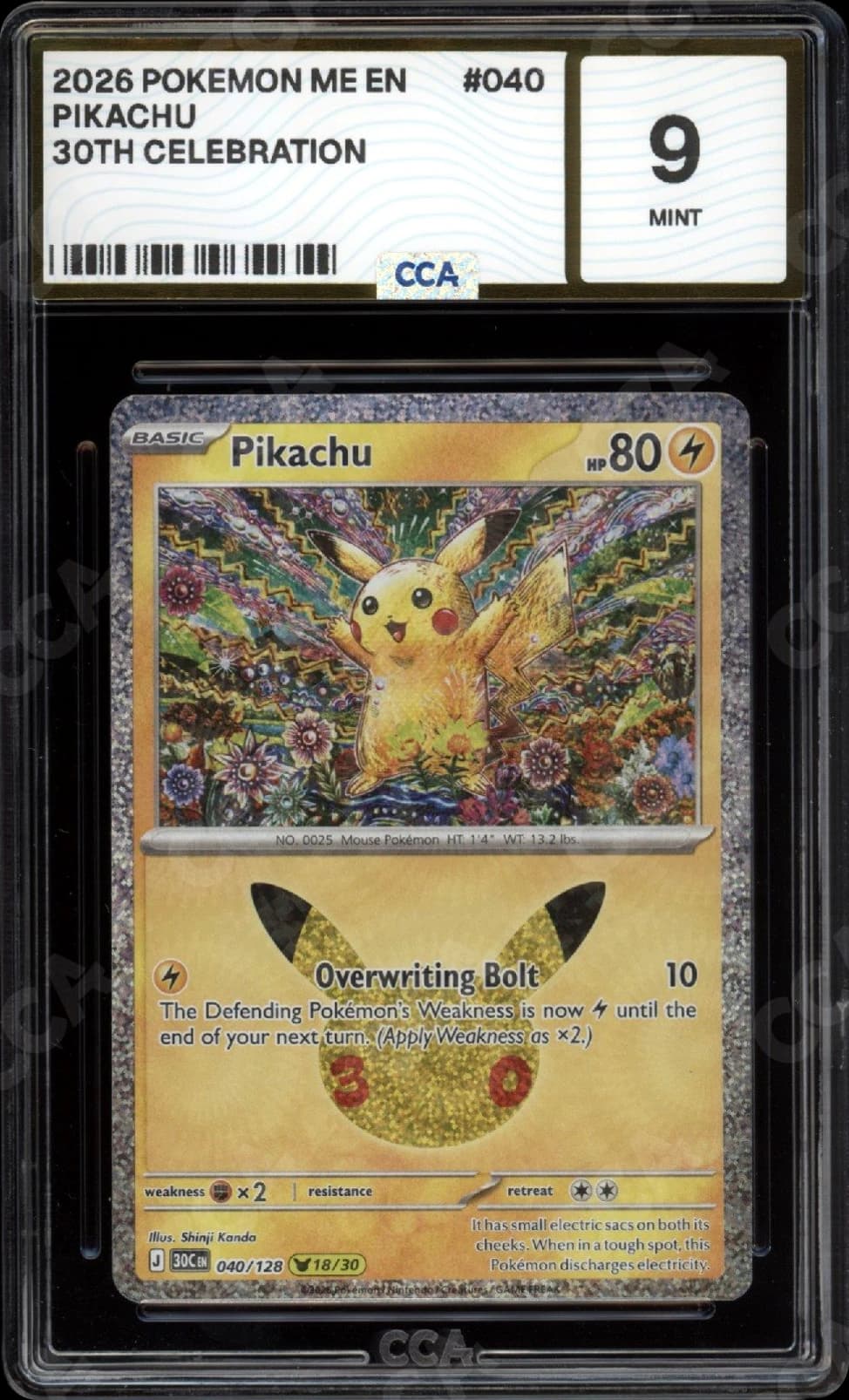
Pikachu
2026 Mega Evolution Series 30th Celebration
CCA 9 · Cert #227
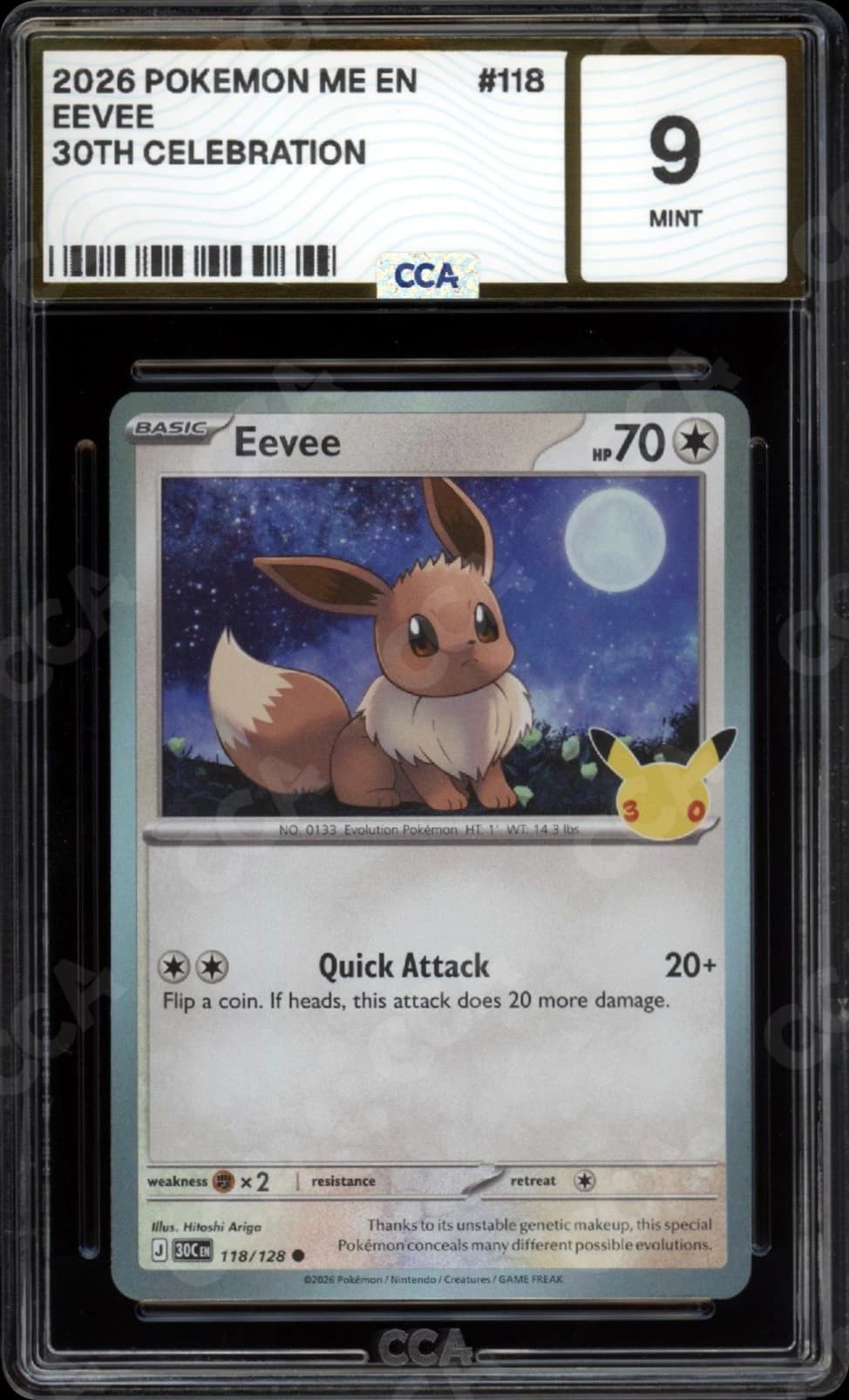
Eevee
2026 Mega Evolution Series 30th Celebration
CCA 9 · Cert #226
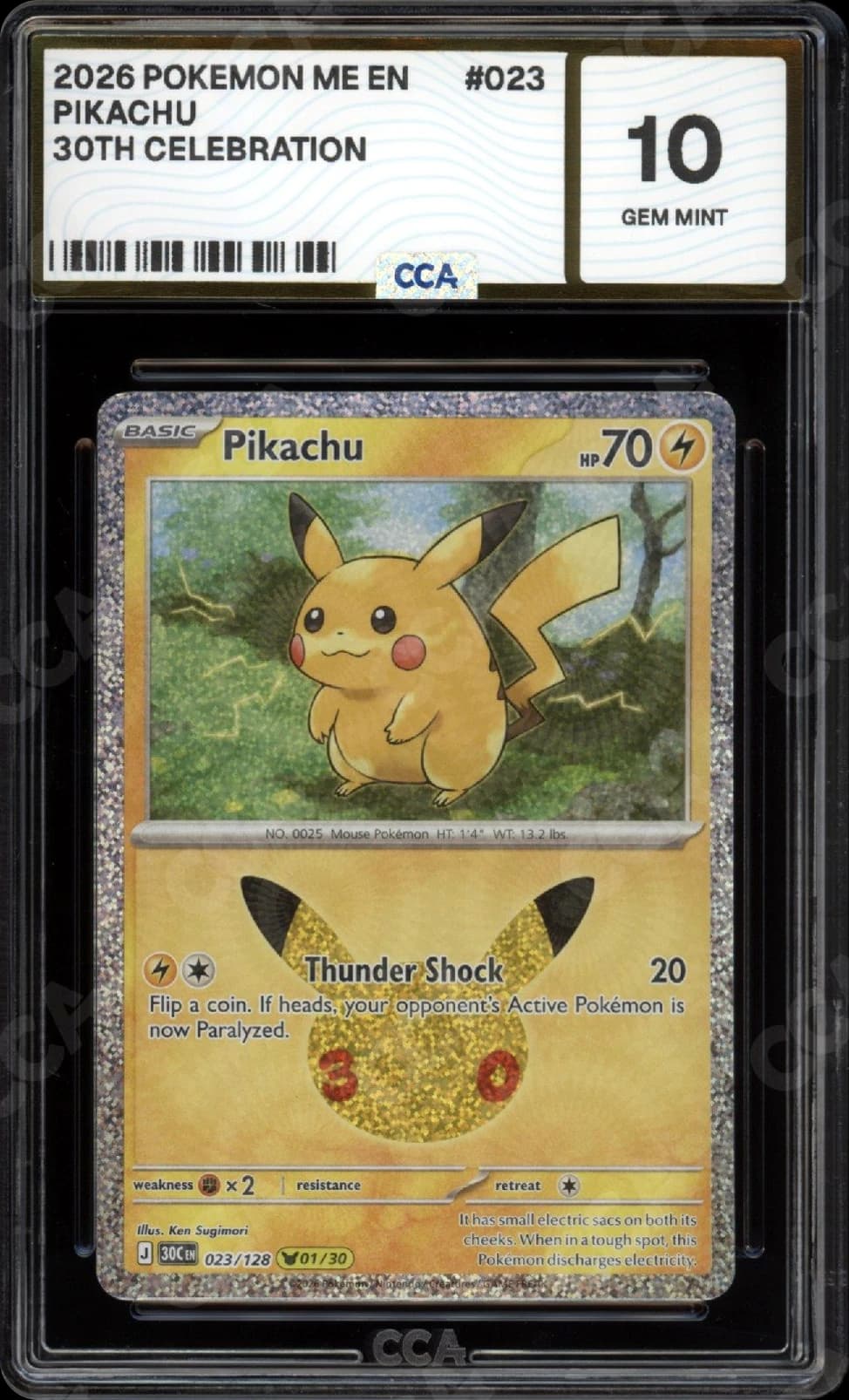
Pikachu
2026 Mega Evolution Series 30th Celebration
CCA 10 · Cert #225
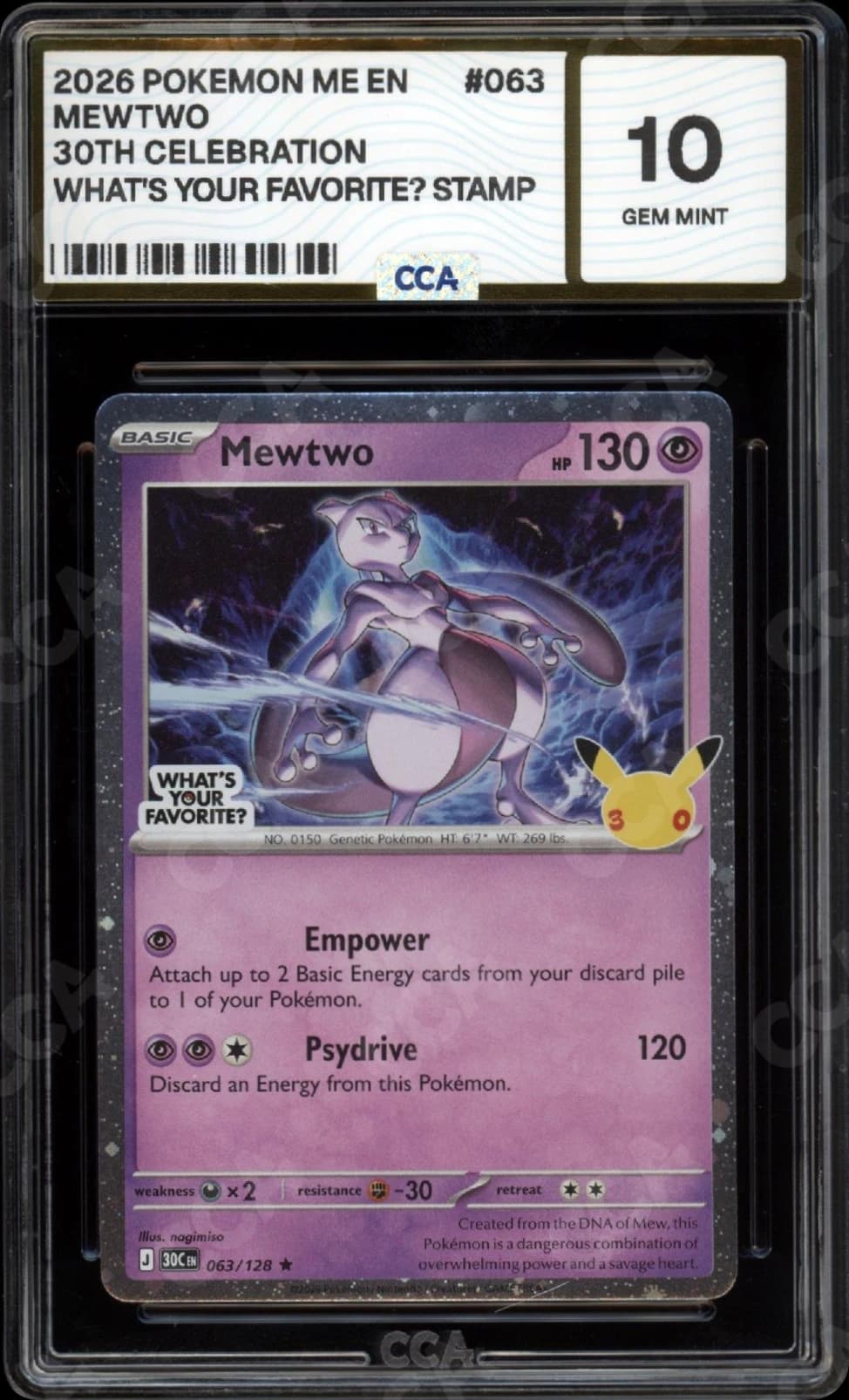
Mewtwo
2026 Mega Evolution Series 30th Celebration
CCA 10 · Cert #224
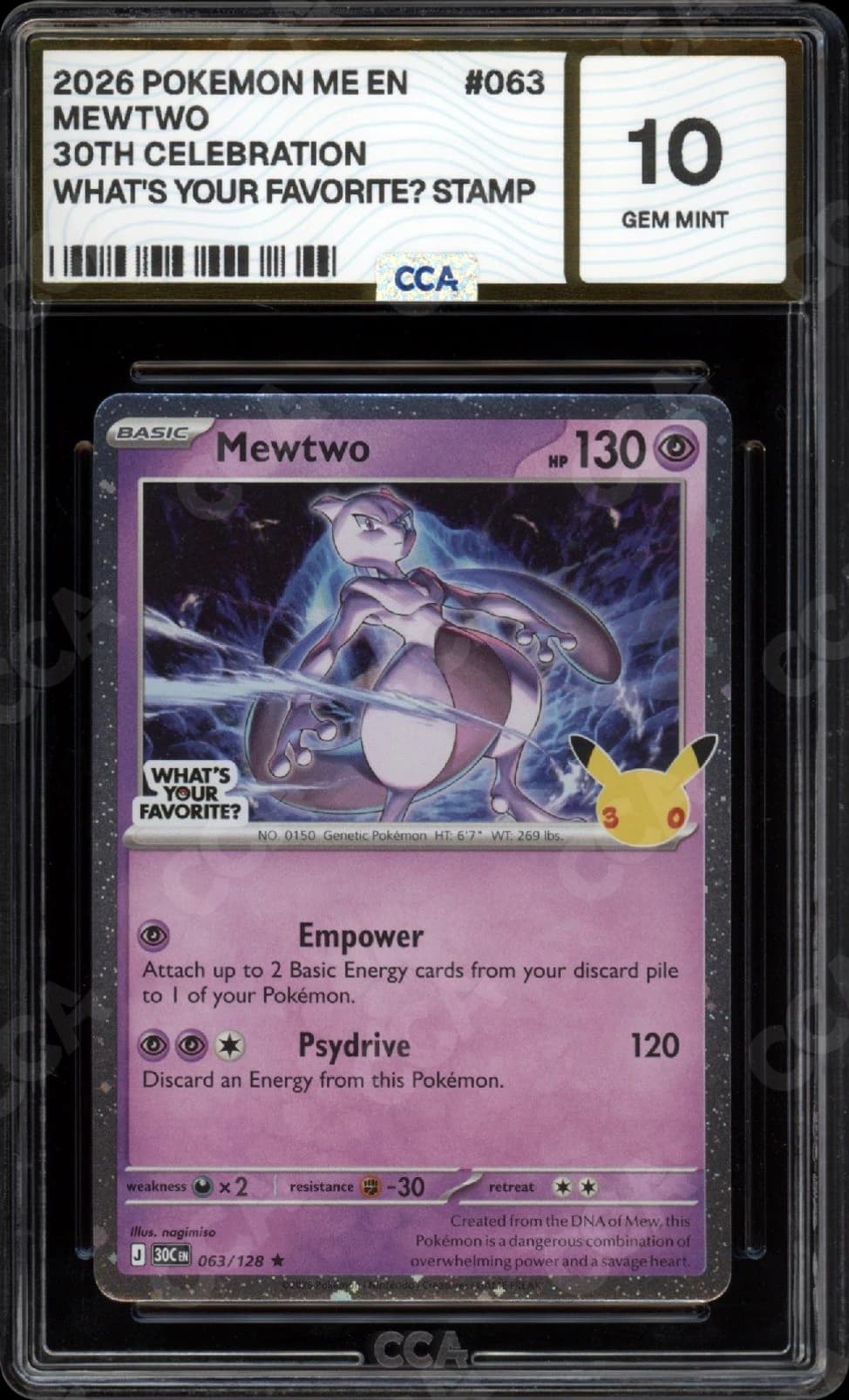
Mewtwo
2026 Mega Evolution Series 30th Celebration
CCA 10 · Cert #223
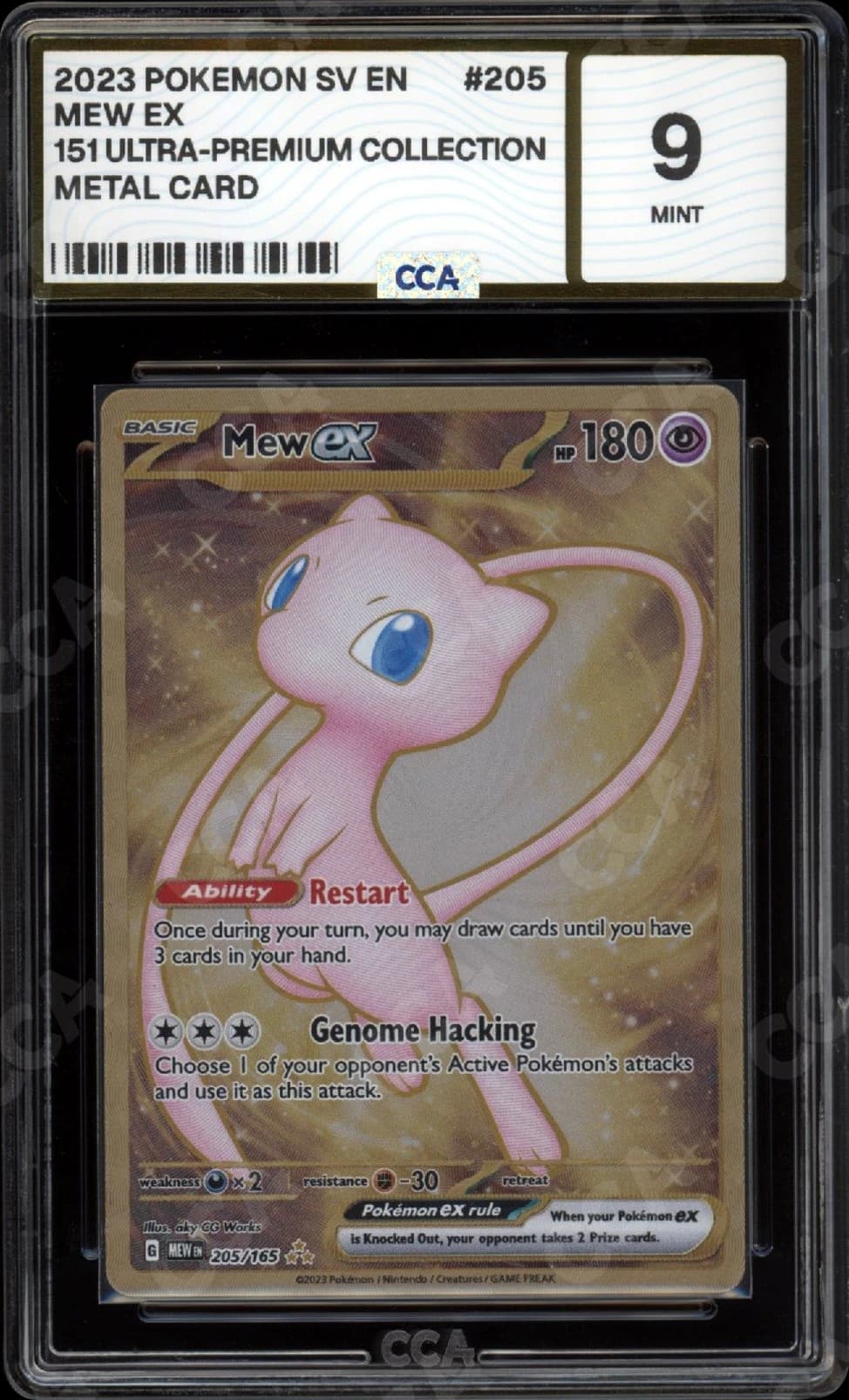
Mew ex
2023 Scarlet & Violet Series SVP Black Star Promos
CCA 9 · Cert #222
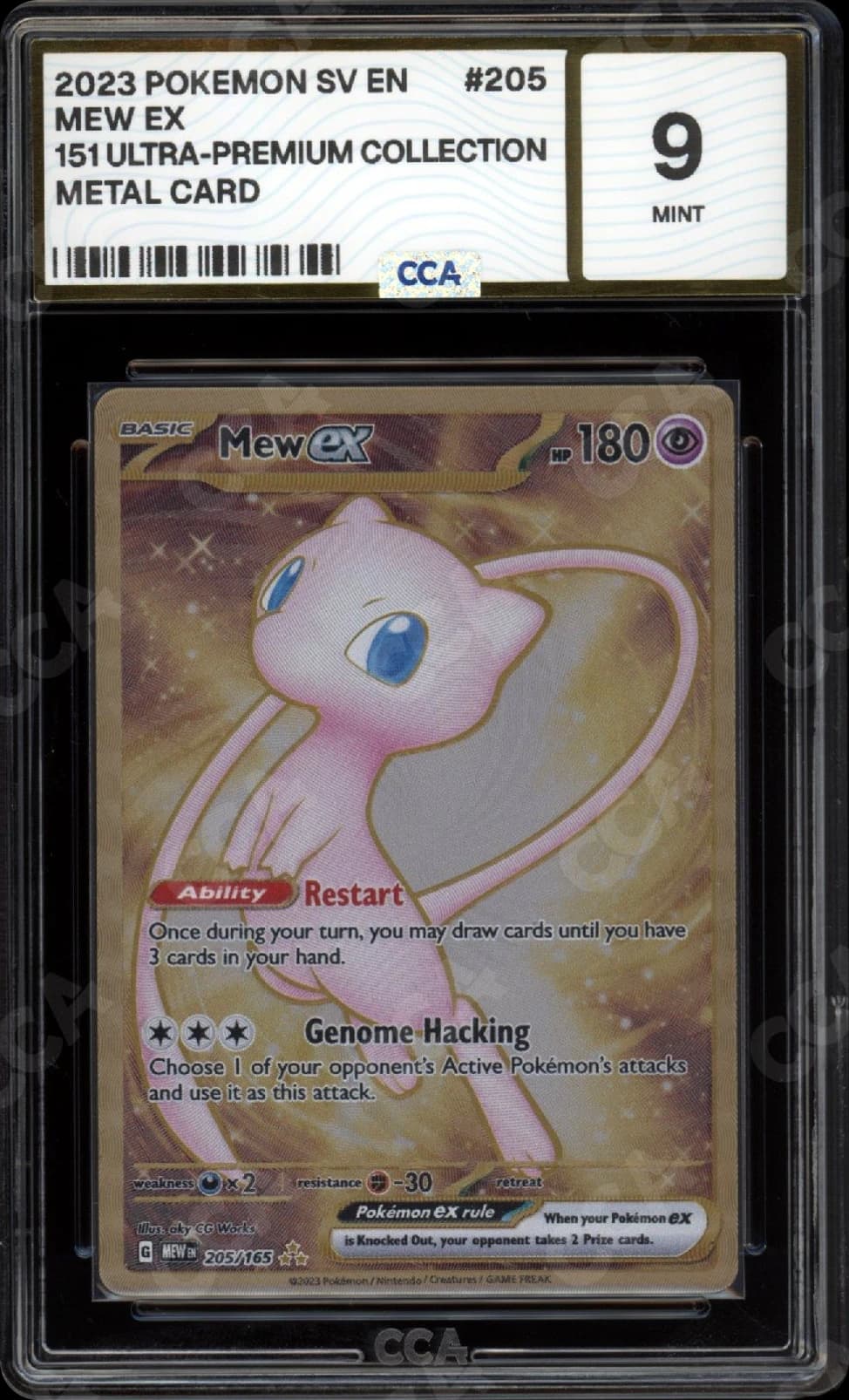
Mew ex
2023 Scarlet & Violet Series SVP Black Star Promos
CCA 9 · Cert #221
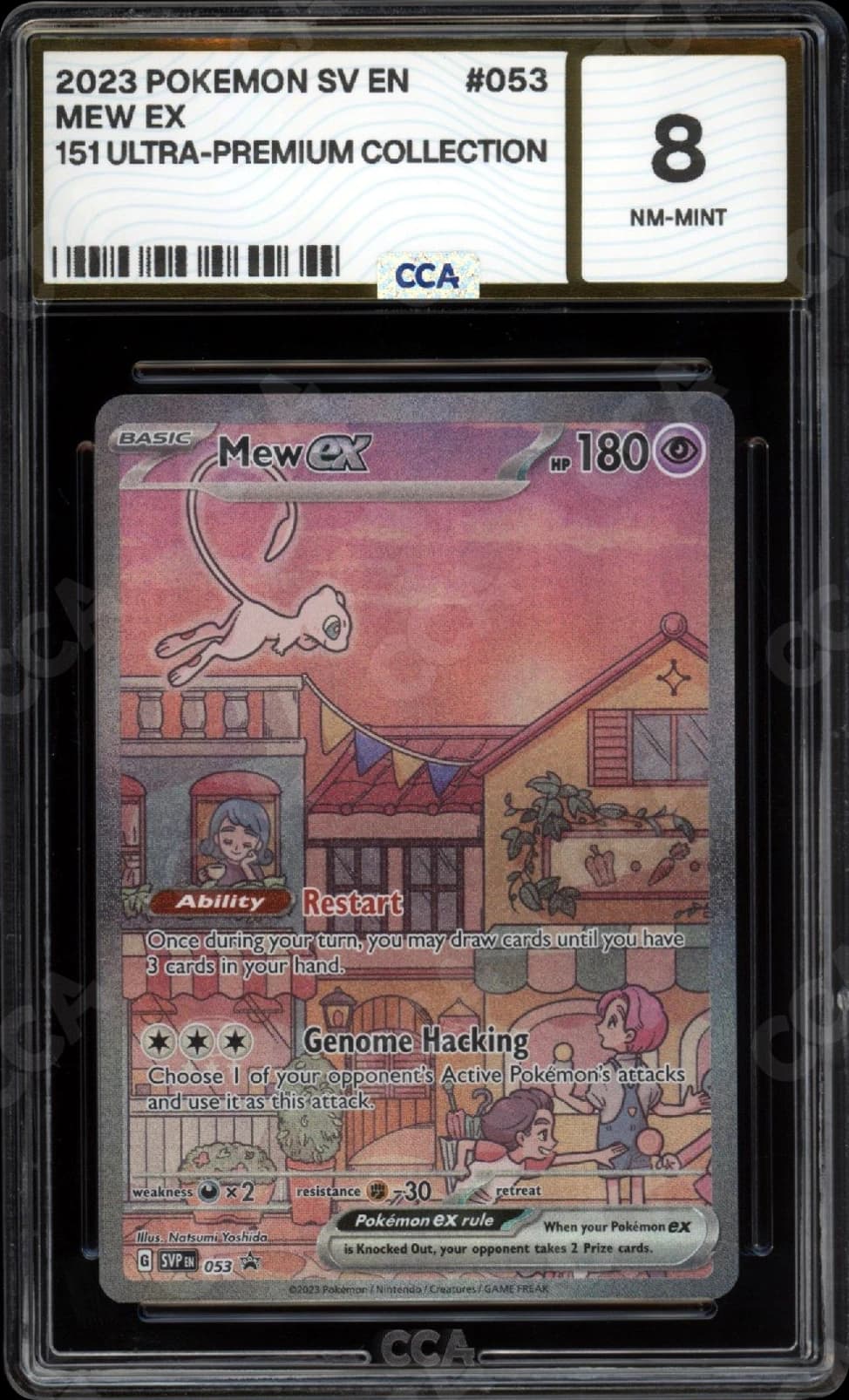
Mew ex
2023 Scarlet & Violet Series SVP Black Star Promos
CCA 8 · Cert #220
Ready when you are
Send your Pokemon cards. Start with ten.
$8 per card on Bulk with 10 or more, or $10 per card on Standard. Four subgrades and a public cert on every card.